

Let me guess how you got here.
You’re in your 30s or 40s. Maybe pushing 50. You spent the last decade building your career, maybe raising a family, taking care of everyone else’s needs. And somewhere along the way, you stopped taking care of yourself.
Now you’ve got what everyone politely calls a “dad bod.” Soft midsection. Love handles. Maybe some back fat. That gut that hangs over your belt. You avoid mirrors. You wear baggy shirts. You feel older than you should.
I get it because I’ve been there. Not the extreme version, but that slow slide where you go from “I should probably hit the gym” to “how did I let this happen?” It’s insidious. One missed workout becomes a month. One beer after work becomes three. One size up in jeans becomes two.

Here’s the truth: you don’t have to stay like this. The dad bod isn’t permanent. You’re not too old, too busy, or too far gone. But you need the right approach, not another failed attempt that lasts two weeks before life gets in the way.
This guide is going to show you exactly how to get rid of the dad bod for good. No gimmicks, no bullshit, just what actually works for guys like us who have jobs, responsibilities, and limited time.
What Actually Happened: Why You Have a Dad Bod
Before we fix it, let’s understand what caused it. Because it’s not just about being lazy or having no willpower.
The Biology Working Against You
Your testosterone has been declining since about 30. Research shows that partnering up and having kids accelerates this decline, with men experiencing 26-34% drops in testosterone levels. But even if you don’t have kids, that natural age-related decline is real.
Lower testosterone means easier fat gain (especially around your middle), harder time building muscle, lower energy, reduced sex drive. Your body is literally working against you in ways it wasn’t in your 20s.
Your metabolism has slowed down too. Age-related muscle loss means your body burns fewer calories at rest. Less muscle, lower metabolism, easier fat gain. It’s a downward spiral most guys don’t realize they’re in until the damage is done.
Then there’s cortisol. Stress from work, finances, family responsibilities, that constant low-level anxiety of modern life keeps your stress hormone elevated. High cortisol promotes fat storage directly around your midsection. That beer gut? A lot of it is stress, not just beer.
The Lifestyle Perfect Storm
But it’s not just hormones. Your entire life changed.
Time disappeared. Between career demands, family stuff, responsibilities, there’s no time left for you. Those 90-minute gym sessions you used to do? Gone. Meal prep? Who has time for that?
Sleep got destroyed. Maybe you have young kids keeping you up. Maybe it’s work stress. Maybe it’s just scrolling your phone at midnight. Either way, you’re not getting 7-8 hours consistently. Sleep restriction can reduce fat loss by up to 55% even when you’re eating less. Your body literally won’t let go of fat when you’re sleep deprived.
Activity plummeted. You went from being somewhat active to a desk job to a couch at night. Your daily steps dropped from 8,000+ to under 4,000. Your body adapted by becoming really efficient at storing everything as fat.
Food became comfort. A beer or two (or three) after work to decompress. Second helpings at dinner because you “earned it.” Stress eating became automatic. Using food to cope with overwhelm happens so gradually you don’t notice until your pants don’t fit.
Self-care became selfish. At some point, taking care of yourself started feeling like you were taking away from other priorities. Everyone else’s needs came first. Yours got pushed to the bottom of the list indefinitely.
Why Your Past Attempts Failed
You’ve probably tried to fix this before. Maybe multiple times. And it didn’t stick.
Here’s why:
You tried all-or-nothing approaches. Training six days a week, meal prepping everything, cutting out entire food groups. It worked for two weeks, then life happened and you fell completely off.
You followed programs designed for 22-year-olds with unlimited time and recovery capacity. Those programs don’t account for operating on six hours of sleep, having a stressful job, or needing to actually function the next day.
You tried extreme diets that made you miserable. Low carb while everyone around you eats normally. Intermittent fasting that left you irritable and hungry. It’s exhausting fighting against normal life.
You tried to train like you did in your 20s, and your body said no. Injuries happened. Recovery was terrible. You couldn’t sustain it.
The missing piece? A system that works with your life, not against it.
The Real Cost of Staying Like This
Let’s be direct about what happens if you don’t address this.
Health Consequences You Can’t Ignore
That visceral fat around your midsection isn’t just cosmetic. It promotes inflammatory chemicals that increase your risk of cardiovascular disease, type 2 diabetes, metabolic syndrome, and earlier death.
You’re living in a chronic low-grade inflammatory state right now. This isn’t theoretical future risk. Joint pain, lack of energy, brain fog, these are symptoms of what’s happening inside your body today.
The cascade effect is real. One problem leads to another. Your knees hurt because you’re carrying extra weight. The knee pain makes you less active. Being less active means more weight gain. And on it goes.
Here’s the question that should bother you: Will you be healthy enough to enjoy the next 20-30 years? Or will you be dealing with diabetes complications, heart problems, and a list of medications?
The Confidence and Energy Crisis
You’ve lost a piece of yourself, haven’t you?
You used to feel confident. Now you avoid situations where you’d have to take your shirt off. You wear baggy clothes. You feel invisible or worse, like everyone can see exactly what you’re trying to hide.
Your energy is shot. You’re exhausted all the time. Coffee just gets you to baseline. By 8pm you’re done. Weekends that should recharge you leave you needing recovery.
You’re missing out on things because you don’t have the gas in the tank. Activities you’d enjoy, opportunities, experiences. You’re letting life pass by because you’re too tired to fully participate.
At work, you’re not showing up with the presence and energy you could. That brain fog and fatigue affect your decisions, creativity, leadership. You’re not performing at your potential.
And if we’re being honest, your relationship has probably been affected too. The physical intimacy, the attraction, the energy for connection. It’s not the same.
The Mindset Trap
The most dangerous part? You’ve made peace with it.
“This is just what happens when you get older.” You’ve accepted mediocrity as inevitable. You’ve given up.
That resignation doesn’t stay contained to just your body. It spreads. It affects your career ambitions, your relationships, your dreams. When you accept that you can’t change your body, you start accepting you can’t change other things either.
This is the real cost. Not the belly fat itself, but what accepting the belly fat does to everything else in your life.
Why You Can Actually Get Rid of It
Now for the good news: none of this is permanent.
Your body still wants to be lean and strong. That’s its natural state. Right now, your environment and habits are fighting against it, but the capacity for change is absolutely still there.
I’ve watched guys in their 40s and 50s completely transform their bodies in 3-6 months. Not pro athletes, not genetic freaks. Regular guys with jobs and families and limited time. Guys who hadn’t touched a weight in 15 years. Guys who were 40-50 pounds overweight.
The key? They followed a system that actually fit their lives.
What You Actually Gain
This isn’t really about getting abs. It’s about getting your life back.
You want energy. To wake up feeling rested instead of dreading the day. To have gas left in the tank at 8pm. To feel alive again instead of just surviving.
You want mental clarity. That fog to lift. Your focus to return. Your mood to stabilize. Your decision-making to sharpen.
You want functional strength. To move through life without feeling limited. To handle physical challenges without worrying about your back. To feel capable again.
You want longevity. To be healthy and active for the next 30-40 years. To not be limited by preventable health problems. To actually enjoy your later years.
You want your confidence back. To feel like yourself again. To not avoid mirrors or photos. To show up fully in every area of your life.
The Foundation: Fix Your Mindset First
Here’s what needs to change in your head before anything else works.
Stop Trying to Be Perfect
You need 80%, not 100%. Hit your protein target 6 days out of 7? Win. Complete 3 workouts out of 4? Progress. Make decent food choices most of the time? You’re winning.
The guys who try for perfection burn out in weeks. The guys who consistently hit 80% for months? They transform.
Embrace “good enough” over flawless. A 35-minute workout is infinitely better than the 90-minute perfect workout you don’t have time for. Maintenance is better than nothing.
Make Yourself a Priority Without Guilt
Your family needs the healthy version of you. They need you with energy. They need you present and alive for the next 30 years. They need the role model you become when you stop giving up on yourself.
Think about the oxygen mask principle. You put yours on first so you can help others. Same thing here. You can’t be everything you want to be for other people if you’re exhausted, unhealthy, and disconnected from yourself.
Investing 3-4 hours per week in your health makes you better for everyone else the other 164 hours.
Build an Identity, Not Just a Goal
There’s a massive difference between “I need to lose weight” and “I’m a man who takes care of his body.”
The first is temporary. The second is permanent.
When you shift your identity, your behaviors follow automatically. You don’t debate whether to work out. Men who take care of themselves work out. You don’t debate whether to eat protein. That’s what you do.
This is the difference between motivation and commitment. Motivation gets you started. Identity keeps you going for years.
Stop Comparing to Your Old Self
Your 40-year-old self doesn’t need to be your 25-year-old self. Your 40-year-old self just needs to be better than your 39-year-old self.
Compete with yesterday’s version of you. That’s it. Everything else is noise.
Your transformation timeline is your own. Some guys lose fat faster. Some build muscle faster. Your genetics, starting point, and life circumstances are unique. The only comparison that matters is you versus you.
Nutrition: What You Actually Need to Do
This is where most guys overcomplicate things. Let’s keep it simple.
The Non-Negotiable: Caloric Deficit
If you’re not eating fewer calories than you burn, you won’t lose fat. Period. No supplement, workout, or special diet overrides thermodynamics.
Use my TDEE calculator to find your maintenance calories, then subtract 300-500. That’s your starting point for steady fat loss (about 0.5-1 pound per week) without being miserable or losing muscle.
Track what you eat for the first 4-6 weeks. Use MyFitnessPal or similar. This isn’t about being perfect. It’s about awareness. Most guys have no idea they’re eating 3,000+ calories a day until they actually measure it.
Protein: Your Transformation Foundation
Aim for 0.7-1g of protein per pound of body weight. If you weigh 200 pounds, that’s 140-200g daily.
Why? Because protein preserves muscle mass while you lose fat, according to research on resistance training with adequate protein intake. You’re losing fat, not muscle. Protein also keeps you full longer and burns more calories during digestion than carbs or fats.
Good sources: chicken, lean beef, fish, eggs, Greek yogurt, protein powder.
Use my macro calculator to dial in your specific targets based on your stats and goals.
Don’t Fear Carbs or Fats
Your body needs both. Carbs fuel your training and daily energy. Fats support hormone production (crucial when testosterone is already declining). Aim for about 25-30% of calories from fat, fill the rest with carbs.
The issue isn’t carbs. It’s excessive calories from any source combined with being sedentary.
The Family-Friendly Approach
You don’t need separate meals. Make the same dinner as everyone else. Just adjust your portions:
- More protein (double the chicken)
- Same or slightly less carbs (one serving of rice instead of two)
- Load up on vegetables
- Skip seconds
The 80/20 rule keeps you sane. Eat whole, minimally processed foods 80% of the time. The other 20% includes pizza night, birthday cake, date dinners. You’re not giving up life to get in shape.
Navigating Real Life
Social events: Load up on protein, take reasonable portions of everything else, skip or limit the high-calorie extras. Stay for the entire event, enjoy the company, just be strategic with your plate.
Restaurants: Order protein-focused meals (steak, chicken, fish), get vegetables as your side, skip the bread basket. You can fully participate without derailing.
Late-night eating: This is usually habit, not hunger. Replace the habit with something else (tea, reading, whatever). If you’re legitimately hungry, have a protein-focused snack.
Alcohol: This is the hard truth. Alcohol is 7 calories per gram (almost as much as fat), provides zero nutrition, disrupts sleep quality, and lowers testosterone. If you’re serious about getting rid of the dad bod, limit it to 1-2 drinks per week maximum.
Practical Implementation
Meal prep doesn’t have to be complicated. Sunday, grill or bake 3-4 pounds of chicken. Make a batch of rice. That’s your base for the week. Mix with different seasonings and vegetables to keep it interesting.
Fast protein sources: Rotisserie chicken, canned tuna, Greek yogurt, protein powder, deli turkey, eggs. Keep these on hand.
Grocery shopping: Shop the perimeter (meat, produce, dairy). Avoid the middle aisles except for rice, oats, pantry staples. If it comes in a box with a cartoon character, skip it.
Restaurant ordering: Grilled over fried. Vegetables over fries. Sauce on the side. Double vegetables instead of starch. Simple.
Training: Building Muscle and Burning Fat
Now for what to do in the gym.
Why Strength Training Is Non-Negotiable
Cardio alone won’t get rid of the dad bod. When you lose weight through diet and cardio only, you lose both fat and muscle. You become a smaller, softer version of yourself. Still don’t look good shirtless.
Resistance training preserves and builds muscle while you lose fat. Research shows this dramatically improves body composition outcomes. You’re losing fat while building the muscle that makes you look good.
Beyond looks, resistance training improves insulin sensitivity, reduces inflammation, increases bone density. Each kilogram of muscle adds about 13 calories to your resting metabolism per day. More muscle means higher metabolism at rest.
Functional strength matters too. You need to lift heavy stuff, carry things, move through life. Strength training builds capacity for real life, not just gym performance.
The Time-Efficient Framework
You don’t need 90-minute sessions. You need 30-45 minutes of focused work, 3-4 times per week.
Quality beats duration. A well-structured 35-minute session delivers better results than an unfocused 75-minute session.
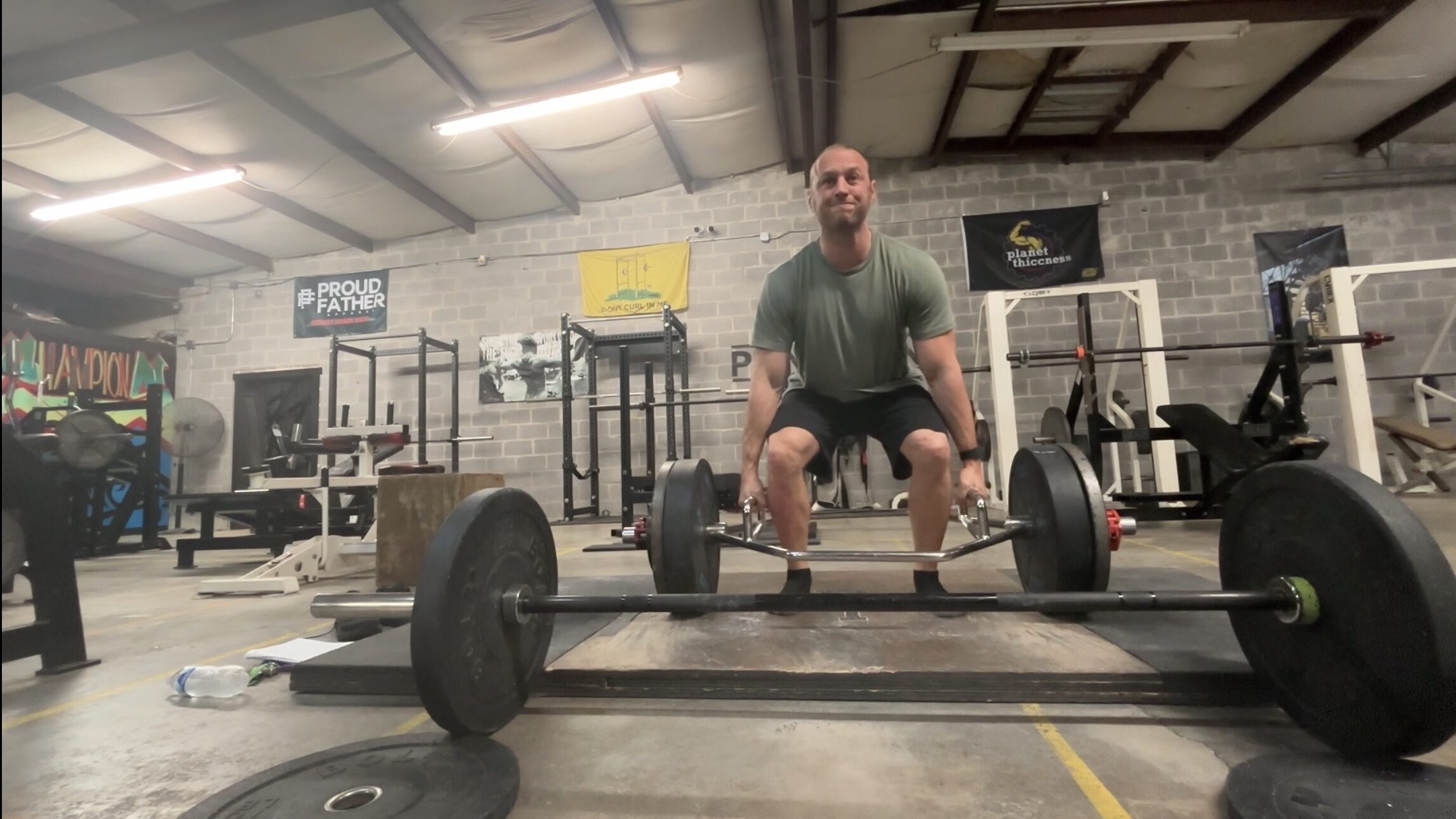
Focus on compound movements: These work multiple muscle groups at once. More efficient, more functional, better hormonal response.
Research shows that compound exercises involving larger muscle groups elicit greater hormonal responses and metabolic benefits. The big movements like squats, deadlifts, and rows benefit all muscle groups because the hormone response is systemic.
The foundation:
- Squat (goblet squat, barbell squat, front squat)
- Hinge (deadlift, Romanian deadlift, hip thrust)
- Push (bench press, overhead press, push-ups)
- Pull (rows, pull-ups, lat pulldowns)
Build everything around these. Add isolation work if time permits, but these are the foundation.
Full-body vs. splits: For most guys with limited time, full-body workouts 3 times per week beat body part splits. If you miss a session, you haven’t missed an entire body part. You hit everything multiple times per week. Recovery is better.
Progressive overload simplified: Each week, try to do slightly more than last week. Add 5 pounds to the bar. Do one more rep. Rest 10 seconds less. Something measurable increases. This drives adaptation.
Leave two in the tank: My rule for every set. You should feel like you could do 2 more reps with good form but you stop. This allows for consistent progress without burning out or getting injured. This approach is especially important for guys coming back after years off to ensure you actually stick with it.
Sample Weekly Structure
Monday: Full-Body Strength
- Goblet squats: 3 x 8-10
- Dumbbell bench press: 3 x 8-10
- Bent-over rows: 3 x 8-10
- Romanian deadlifts: 3 x 10-12
- Planks: 3 x 30-45 seconds
Wednesday: Full-Body Strength
- Barbell deadlifts: 3 x 6-8
- Overhead press: 3 x 8-10
- Pull-ups or lat pulldowns: 3 x 8-10
- Lunges: 3 x 8-10 per leg
- Pallof press: 3 x 10 per side
Friday: Full-Body Strength
- Front squats or leg press: 3 x 8-10
- Incline dumbbell press: 3 x 8-10
- Cable rows: 3 x 10-12
- Leg curls: 3 x 10-12
- Farmer’s carries: 3 x 30-40 yards
This hits everything, takes 35-45 minutes, and you’re done for the day. No two-hour sessions required.
The Cardio Question
Cardio doesn’t fix the dad bod. Your caloric deficit does.
Cardio is useful for cardiovascular health, creating or expanding your deficit, active recovery, and mental health. But you don’t need hours of it.
Strategic cardio:
HIIT: 15-20 minutes, 2-3 times per week after lifting or on off days. Sprint for 30 seconds, walk for 60 seconds. Repeat. Time-efficient and effective.
LISS (Low-Intensity Steady State): 30-45 minute walk daily if possible. Aids recovery, doesn’t tax your system, can do it with family or while listening to podcasts.
Activity integration: Take the stairs, park farther away, move throughout the day. This adds up significantly over time.
Home Gym vs. Commercial Gym
Home gym: A barbell, rack, bench, and plates is all you need for exceptional results. Add adjustable dumbbells if space and budget allow. Most guys I work with train at home and get great results.
Commercial gym: Great if you have one nearby and can make the schedule work. The key is efficiency. Get in, do your work, get out. No 15-minute phone scrolling between sets.
Bodyweight: Push-ups, pull-ups, bodyweight squats, lunges can work when needed. Not ideal long-term for building muscle, but better than nothing when traveling.
Recovery and Lifestyle Factors
These often make the difference between success and frustration.
Sleep: The Foundation
If you’re getting less than 7 hours per night, you’re sabotaging everything.
Sleep deprivation increases hunger hormones, decreases satiety hormones, reduces insulin sensitivity, lowers testosterone, impairs recovery from training, and reduces willpower.
Target 7-9 hours. Here’s how:
Set a bedtime and stick to it. If you need to be up at 6am, you need to be asleep by 10:30pm. Treat it like an appointment.
No screens 1 hour before bed. The blue light suppresses melatonin. Read a book, talk with your partner, anything but scrolling.
Keep the room cool (65-68°F) and dark. Your body sleeps better in cooler temperatures.
Consistent schedule. Same bedtime and wake time every day, even weekends. Your body thrives on routine.
Stress Management
Chronic stress keeps cortisol elevated, which promotes belly fat storage. You can’t out-train chronic stress.
Quick stress reduction:
- Box breathing: 4-second inhale, 4-second hold, 4-second exhale, 4-second hold. Repeat for 2-3 minutes.
- Daily walk outdoors: Nature exposure plus light activity is incredibly effective.
- Work-life boundaries: Stop checking email after 7pm. Set work hours and protect them.
- Unplug: Put your phone down. It’s a major stress source.
The Supplement Reality Check
Most supplements are overhyped and unnecessary. Here’s what actually helps:
Protein powder: Not required, but convenient for hitting protein targets. Whey is fastest-digesting, casein is slower (good before bed).
Vitamin D: Most guys are deficient, especially if you work indoors. Supports testosterone, mood, immune function. Get levels checked, supplement if low.
Omega-3s (fish oil): Supports heart health and reduces inflammation. Aim for 2-3g EPA+DHA daily if you’re not eating fatty fish regularly.
Creatine: 5g daily. Supports strength and muscle growth. Research-backed and safe.
Skip: Fat burners (don’t work, often dangerous), testosterone boosters (most don’t work, some are dangerous for your liver), pre-workouts (unnecessary, just use coffee if you need a boost).
The Timeline: What to Actually Expect
Let’s talk realistic expectations because managing them is crucial for consistency.
Weeks 1-4: Foundation Phase
Focus: Build sustainable habits without burning out.
Training: Learn proper form on major movements. Build the habit of showing up 3-4 times per week. Nothing fancy, just consistent work.
Nutrition: Establish protein intake (hit your target 6-7 days per week). Create your caloric deficit. Track everything to build awareness.
What to expect: You’ll feel better quickly. Energy improves. Sleep improves. You might lose 3-6 pounds (some water weight initially). Strength increases from neural adaptation. You’re building the foundation.
Weeks 5-8: Building Phase
Focus: Increase training intensity and metabolic adaptation. Build confidence.
Training: Progressive overload kicks in. You’re adding weight to the bar or reps to each set when possible. Training feels harder but also more rewarding.
Nutrition: Refine meal timing if needed. Optimize pre-workout and post-workout nutrition. Fine-tune based on how you’re responding.
What to expect: Visible physical changes become apparent. Your clothes fit better. You’ve lost 6-10 pounds total. Strength gains are significant. Energy is consistently higher. This is where you overcome your first plateau.
Weeks 9-12: Transformation Phase
Focus: Accelerate results and lock in your new identity.
Training: Peak performance. You’re lifting weights you couldn’t imagine in week 1. Adding some conditioning work to accelerate fat loss while maintaining strength.
Nutrition: Fine-tuning for maximum results. You know what works for your body now. Hitting targets consistently without much thought.
What to expect: Dramatic body composition change is visible. You’ve lost 12-18 pounds total (depends on starting point). People are commenting consistently. You look different in the mirror. Your “fat clothes” don’t fit anymore. More importantly, you feel different. The energy, the confidence, the strength. You’ve proven to yourself that transformation is possible.
Week 13+: Integration Phase
Focus: Transition to sustainable maintenance. Make this your lifestyle.
Training: Continue progressive overload with an eye toward long-term sustainability. Try new challenges, set performance goals, keep evolving.
Nutrition: Slowly increase calories to maintenance. The reverse diet prevents immediate rebound. Find your sweet spot where you maintain results without constant restriction.
What to expect: You’ve transformed not just your body but your relationship with health and fitness. This is who you are now. The habits are automatic. You’re living the fit lifestyle permanently.
If you’re looking for a structured program that takes the guesswork out of all this, I designed The Comeback specifically for guys in your situation. It’s a 4-week progressive overload program that systematically builds your strength, burns fat, and establishes the habits for long-term success. Time-efficient workouts (30-45 minutes), evidence-based nutrition approach, and built for guys who can’t spend their lives in the gym. It’s not required, but it’s there if you want the structure and proven system.
Common Obstacles and How to Beat Them
Let me address the excuses head-on.
“I Don’t Have Time”
Let’s be real. Where do you actually spend your time?
How much time on social media? TV? Pointless scrolling? The average American watches 3+ hours of TV daily. You don’t have time for a 40-minute workout but you have time for Netflix?
I’m not saying give up all downtime. I’m saying prioritize what matters.
Training at 5am before everyone wakes up works for thousands of guys. Is it ideal? No. Does it work? Absolutely.
Lunch break workouts are another option. 45 minutes including shower is enough.
The truth? You find time for what’s important to you. If transformation was truly a priority, you’d find the time.
“I’m Too Tired”
Exercise creates energy, it doesn’t drain it. This feels counterintuitive but it’s true.
You’re tired because you’re inactive, eating poorly, and sleeping badly. The fatigue-inactivity cycle keeps you stuck. Training breaks that cycle.
After 2-3 weeks of consistent training and better nutrition, your energy levels will be higher than they’ve been in years. You just have to push through the initial resistance.
“I’ve Tried Everything”
Past failures don’t predict future results when you change your approach.
What was missing? Usually one of these: sustainability (too extreme), structure (no clear plan), accountability, consistency (gave up too soon), or system (relied on willpower instead of habits).
This time is different because you’re approaching it differently. You’re not relying on motivation. You’re building systems. You’re not being extreme. You’re being sustainable.
“I’m Too Old”
Biology says you’re wrong.
Men in their 40s, 50s, and 60s can build muscle and lose fat. Research shows older adults demonstrate significant strength and muscle gains in response to resistance training. Age doesn’t prevent adaptation. It just means adaptation happens at a different rate.
The best time to start was 10 years ago. The second best time is today.
What’s the alternative? You’ll be another year older either way. Do you want to be another year older in the same (or worse) shape? Or another year older and transformed?
Your Next Step: Make the Decision
You’ve read this far. You understand what needs to happen. You know transformation is possible.
Now comes the decision point.
Why Waiting Keeps You Stuck
There will never be a perfect time. Work will always be busy. Life will always have demands. There will always be a reason to wait.
The cost of another month of inaction:
- 4 more weeks of low energy
- 4 more weeks of poor confidence
- 4 more weeks of not being who you want to be
- Potential health markers getting worse
The cost of another year? Multiply all of that by 12. And add the compounding effect of watching another year slip by while telling yourself “next year.”
Your future self is begging present you to start now.
The Danger of Winging It
Here’s what happens when you try to figure it all out yourself: you waste months on trial and error. Most guys give up during that frustrating period before they figure it out.
The guys who transform fastest aren’t the most motivated or genetically gifted. They’re the ones following a proven system that takes the guesswork out.
They know exactly what to do for training. They know how to structure nutrition. They have accountability. They have a clear path forward.
Why I Built The Comeback
I created The Comeback for guys exactly like you. Guys in their 30s, 40s, 50s who let themselves go and need a clear path back.
It’s a 4-week progressive overload program that systematically builds strength, burns fat, and establishes the habits you need for long-term success.
Here’s what makes it different:
Time-efficient workouts. 30-45 minutes, 4 days per week. No 2-hour gym sessions required.
Evidence-based approach. Built on proven training principles. Progressive overload done right. Conservative volume increases. Proper exercise selection.
Sustainable nutrition. You’re not eating separate meals or following some extreme diet. Real food in the right amounts while living your normal life.
Clear structure. You know exactly what to do each day. No guessing, no wasted effort, no spinning your wheels.
Proven results. Real guys with real jobs and real lives have used this system to get rid of the dad bod.
The program is $27. That’s less than you spent on your last takeout meal. What’s your health worth? What’s feeling like yourself again worth?
Final Thoughts: The Man You’re Meant to Be
This isn’t about perfection. It’s not about looking like a fitness model or having perfect abs.
This is about getting your energy back so you can actually enjoy life instead of just surviving it.
This is about being healthy enough to live fully for the next 30-40 years without limitation.
This is about having the strength and capability to handle whatever life throws at you.
This is about having the confidence to show up fully in every area of your life.
You’re not broken. You’re just in a season. And seasons change when you decide to change them.
Your body is designed to adapt. It wants to be lean and strong. You just need to give it the right inputs and consistent effort.
Small actions compound into major changes. The guy who trains 3 days per week for a year will look completely different than the guy who trains 6 days per week for a month then quits.
Your best years are still ahead if you choose to make them that way.
The dad bod isn’t permanent. It’s a choice. And you can choose differently starting right now.
You don’t have to be perfect. You just have to start.
Progress beats perfection every single time.
Get Rid of Your Dad Bod With The Comeback
The time is now.


