

Look, I’m going to be straight with you. If you’re reading this, you probably caught a glimpse of yourself in the mirror getting out of the shower, or someone took a photo of you at a family gathering, and you thought “when did that happen?”
That back fat sneaking over your belt line, the rolls under your shoulder blades, maybe even that little pouch situation happening around your bra… wait, I mean where a bra would be. You get it.
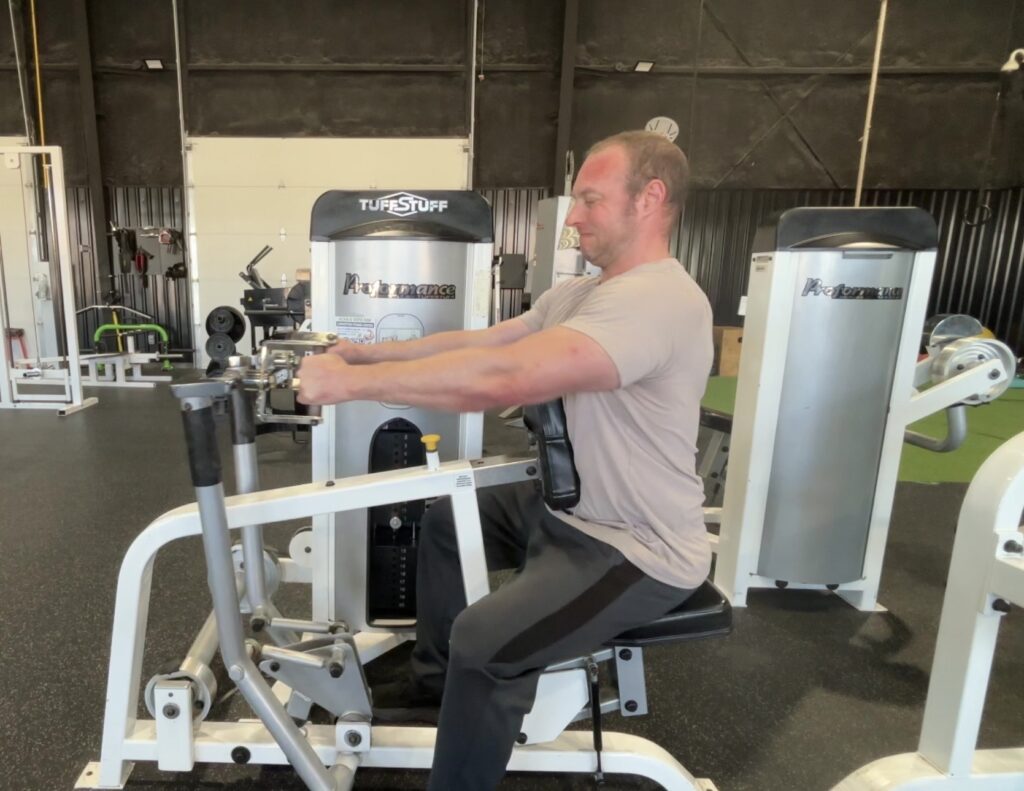
You’re not alone. After 35, after kids, after years of desk work and skipped gym sessions — the perfect recipe for a dad bod — this is where our bodies love to store extra fat. And here’s the thing: back fat is stubborn. It’s one of the last places men lose fat, which makes it frustrating as hell.
But here’s the good news. You can get rid of it. And this is what I help guys with in my coaching program. It just takes the right approach, some patience, and a willingness to do the work. No gimmicks, no magical exercises, just solid science applied consistently.
Let me show you how.
The Truth About Back Fat (And Why You Have It)
Before we get into what to do, you need to understand what you’re dealing with. Back fat shows up in three main areas:
Upper back fat is that fold that appears around your shoulder blades and creates the “bra bulge” effect when you wear fitted shirts. This area gets worse with poor posture and weak upper back muscles.
Mid-back rolls are those horizontal lines that appear when you sit down or bend over. They’re a combination of excess body fat and weak core muscles that can’t hold everything tight.
Lower back fat (sometimes called “love handles extending backward”) sits right above your belt line and wraps around your sides. This is often the most stubborn area for men.
Here’s why it accumulates there:
First, genetics play a role. Some guys store fat in their gut first, others in their back, chest, or legs. You can’t change your genetics, but you can work with them.
Second, posture matters more than most guys realize. Rounded shoulders and a hunched upper back create folds and rolls that make existing fat look worse. Fix your posture, and you’ll look better even before losing a pound.
Third, muscle imbalance is huge. If your chest is tight and your upper back is weak (which describes about 90% of guys who sit at a desk), your posture suffers and that back fat becomes more prominent.
Finally, overall body fat percentage. This is the big one. If you’re carrying extra fat, your body has decided some of it belongs on your back. The only way to change that is to reduce your overall body fat.
The Spot Reduction Myth: Why You Can’t Just “Target” Back Fat
Here’s what you need to accept right now: you cannot spot reduce fat. I don’t care what that Instagram fitness influencer told you. You cannot do a specific exercise to burn fat from just your back.
When you lose fat, your body decides where it comes from. You might lose it from your face first, then your arms, then your gut, and your back might be last. Or it might come off differently. Everyone’s fat loss pattern is unique.
What you CAN do is:
- Reduce your overall body fat percentage through a caloric deficit
- Build muscle in your back to improve how it looks as you lose fat
- Fix your posture so your back looks better at any body fat level
- Strengthen your core to reduce the appearance of mid-back rolls
Think of it this way: you can’t choose where you lose fat, but you can control how good your back looks once you do lose it.
The Foundation: Creating a Caloric Deficit
Let’s talk about the elephant in the room. You can do all the back exercises in the world, but if you’re not in a caloric deficit, you won’t lose back fat. Period.
A caloric deficit means eating fewer calories than your body burns each day. This forces your body to tap into stored fat for energy. It’s basic thermodynamics, and no amount of HIIT workouts or “fat burning” exercises can override it.
Here’s what you need to do:
Step 1: Find Your Maintenance Calories
This is how many calories you burn in a day just existing and doing your normal activities. You can use my TDEE calculator to get a solid estimate based on your age, weight, height, and activity level.
Step 2: Create a Moderate Deficit
Subtract 300-500 calories from your maintenance number. This creates a deficit that allows for steady fat loss (about 0.5-1 pound per week) without tanking your energy or muscle mass.
Going more aggressive than this is a mistake most guys make. You’ll lose muscle along with fat, you’ll be miserable, and you’ll quit before seeing real results. Slow and steady wins here.
Step 3: Track Consistently
You don’t have to track forever, but for the first 4-6 weeks, use an app like MyFitnessPal to log what you eat. This isn’t about being perfect. It’s about awareness. Most guys have no idea they’re eating 3,000+ calories a day until they actually measure it.
Need help dialing in your nutrition? Check out my macro calculator to see how much protein, carbs, and fats you should be hitting.
Nutrition Strategy: What To Eat To Lose Back Fat
Okay, so you know you need a caloric deficit. But what should you actually eat? Here’s the framework I give my coaching clients:
Prioritize Protein
Aim for 0.7-1g of protein per pound of body weight. So if you weigh 200 pounds, that’s 140-200g of protein per day.
Why? Because protein does three critical things:
- It preserves muscle mass while you lose fat (research shows resistance training combined with adequate protein maintains lean mass during a deficit)
- It keeps you full longer than carbs or fats
- It has a higher thermic effect, meaning your body burns more calories digesting it
Good sources: chicken, lean beef, fish, eggs, Greek yogurt, protein powder.
Don’t Fear Carbs
Carbs aren’t your enemy. Your body needs them for energy, especially if you’re training hard. Focus on complex carbs that provide sustained energy: rice, potatoes, oats, whole grain bread.
The issue isn’t carbs. It’s excessive calories from any source combined with a sedentary lifestyle.
Include Healthy Fats
Fats support hormone production, which is crucial for maintaining muscle and burning fat. Aim for about 25-30% of your calories from fat.
Good sources: olive oil, avocados, nuts, fatty fish like salmon.
Hydration Matters
Drink at least half your body weight in ounces of water daily. So if you weigh 200 pounds, that’s 100 ounces of water. Proper hydration supports metabolism and helps reduce water retention that can make your back look puffier.
Foods to Limit (Not Eliminate)
I’m not going to tell you to never eat pizza or drink beer again. That’s unrealistic. But limit:
- Highly processed foods with excessive added sugars
- Fried foods that pack tons of calories into small portions
- Liquid calories (soda, juice, excessive alcohol)
The 80/20 rule works great here. Eat whole, minimally processed foods 80% of the time. The other 20% can include foods you enjoy. This makes the whole thing sustainable.
Training Strategy: Building a Better Back
Now for the part you’ve been waiting for. The training.
Remember: these exercises won’t specifically burn back fat, but they will build the muscle that makes your back look good once you lose the fat. They’ll also improve your posture and make you stronger, which has carryover to everything else you do.
Upper Back Exercises
These target the muscles between and below your shoulder blades. Building this area pulls your shoulders back, improves posture, and creates that V-taper look.
1. Bent-Over Barbell Rows

This is the foundation of upper back development. It hits your lats, rhomboids, and mid-traps all at once.
How to do it: Hinge at the hips with a slight knee bend, keep your back flat, and pull the barbell to your lower chest. Control the weight down. Don’t use momentum.
Sets/reps: 3-4 sets of 8-12 reps
2. Lat Pulldowns
Great for building width in your back and strengthening the muscles that help pull your shoulders down and back.
How to do it: Sit at the machine, grab the bar slightly wider than shoulder width, and pull it to your upper chest while keeping your chest up. Squeeze your shoulder blades together at the bottom.
Sets/reps: 3 sets of 10-12 reps
3. Face Pulls
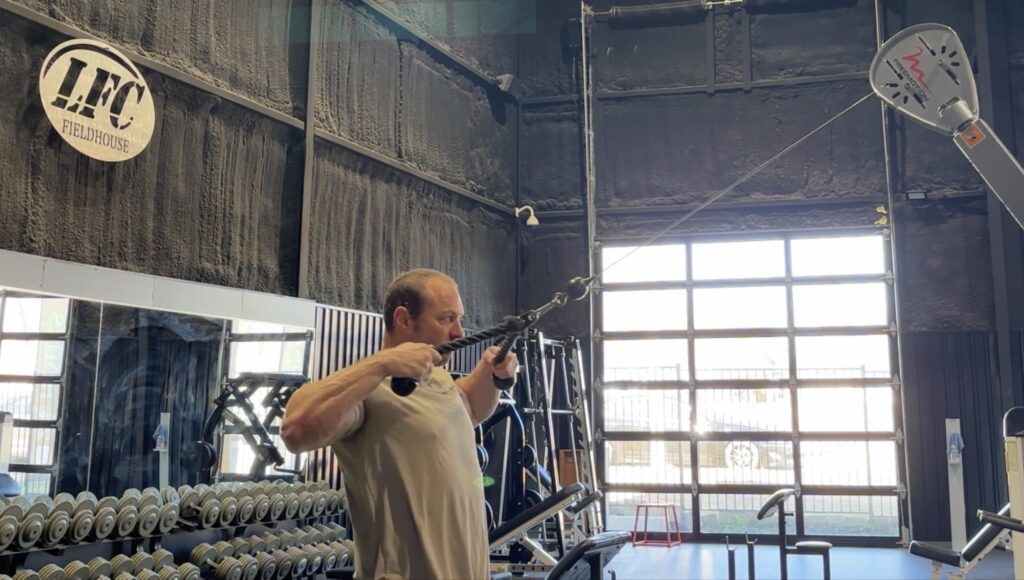
This exercise is critical for shoulder health and fixing rounded shoulders. It targets your rear delts and upper back.
How to do it: Using a rope attachment on a cable machine set at face height, pull the rope toward your face, separating the ends as you pull. Your elbows should stay high.
Sets/reps: 3 sets of 12-15 reps
4. Reverse Flyes
Another rear delt and upper back exercise. You can do these with dumbbells or cables.
How to do it: Bend forward at the hips, let the dumbbells hang straight down, then raise them out to the sides while keeping a slight bend in your elbows. Think about pulling your shoulder blades together.
Sets/reps: 3 sets of 12-15 reps
Lower Back and Core Exercises
A strong lower back and core reduces the appearance of those love handles wrapping around to your back. These exercises also protect your spine during other lifts.
1. Deadlifts (Romanian or Conventional)
The king of posterior chain exercises. Deadlifts work your entire back, glutes, and hamstrings while building serious strength.
This is why deadlifts are non-negotiable in my programming. Research by Kraemer and Ratamess shows that exercises stressing large muscle groups like deadlifts produce significantly greater acute elevations in testosterone and growth hormone compared to low-volume or isolation work. That hormonal response supports both muscle growth and fat loss systemically — not just in the muscles you’re directly training.
How to do it: Start with Romanian deadlifts if you’re newer to lifting. Keep the bar close to your body, hinge at the hips, keep a neutral spine, and feel the stretch in your hamstrings.
Sets/reps: 3-4 sets of 6-10 reps
2. Planks (and Variations)
Planks build core stability that transfers to every other exercise you do. They also activate the deep core muscles that help keep your midsection tight.
How to do it: Hold a forearm plank position with your body in a straight line. Don’t let your hips sag or pike up. Squeeze your glutes and brace your core.
Duration: 3 sets of 30-60 seconds
Variations: side planks, plank with shoulder taps, RKC planks for advanced guys.
3. Bird Dogs
This exercise improves core stability and teaches you to maintain a neutral spine while moving your limbs. Critical for preventing back pain.
How to do it: Start on hands and knees. Extend your right arm and left leg simultaneously, hold for 2 seconds, then return. Alternate sides. Keep your core braced and don’t let your lower back arch.
Sets/reps: 3 sets of 10-12 reps per side
4. Superman Holds
Strengthens your lower back and glutes while improving posterior chain endurance.
How to do it: Lie face down, extend your arms overhead. Simultaneously lift your arms, chest, and legs off the ground. Hold for 3-5 seconds, then lower.
Sets/reps: 3 sets of 8-10 reps
Full Back Compound Movements
These exercises work multiple areas of your back at once. They’re efficient and effective.
1. Pull-Ups or Assisted Pull-Ups
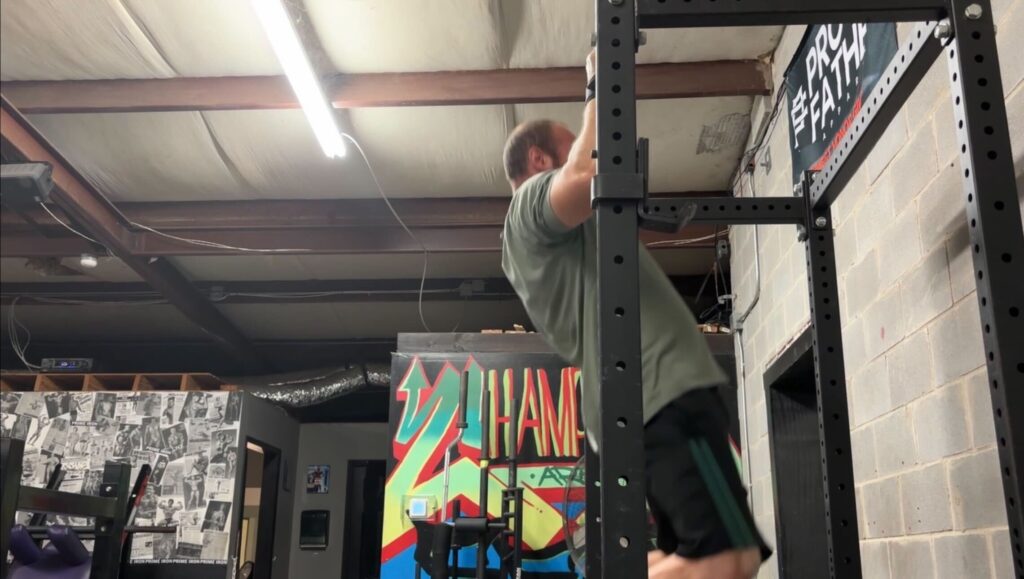
If you can’t do pull-ups yet, use an assisted pull-up machine or resistance bands. Work toward doing them unassisted.
How to do it: Hang from the bar with hands slightly wider than shoulder width. Pull yourself up until your chin clears the bar. Lower with control.
Sets/reps: 3-4 sets of as many quality reps as possible
2. Seated Cable Rows
Another rowing variation that lets you really focus on squeezing your shoulder blades together.
How to do it: Sit at the cable machine, grab the handles, and pull them to your lower chest. Keep your torso upright and squeeze your shoulder blades together at the end of each rep.
Sets/reps: 3 sets of 10-12 reps
3. T-Bar Rows
Excellent for building thickness in your mid-back.
How to do it: Straddle the bar, hinge at the hips, and pull the bar to your chest. Keep your elbows close to your body.
Sets/reps: 3-4 sets of 8-12 reps
Sample Back Workout Routines
Here’s how to put it all together. These are the actual workout structures I use when I program back work for guys coming back after time off.
Beginner Back-Focused Workout (2x per week)
Workout A:
- Lat Pulldowns: 3 x 10-12
- Seated Cable Rows: 3 x 10-12
- Face Pulls: 3 x 12-15
- Planks: 3 x 30-45 seconds
- Bird Dogs: 3 x 10 per side
Workout B:
- Bent-Over Dumbbell Rows: 3 x 10-12 per arm
- Romanian Deadlifts: 3 x 8-10
- Reverse Flyes: 3 x 12-15
- Dead Bugs: 3 x 10 per side
- Superman Holds: 3 x 8-10
Intermediate Back-Focused Workout (2-3x per week)
Upper Back Focus:
- Pull-Ups or Assisted Pull-Ups: 4 x 6-10
- Bent-Over Barbell Rows: 4 x 8-10
- Lat Pulldowns: 3 x 10-12
- Face Pulls: 3 x 15
- Reverse Flyes: 3 x 12-15
Lower Back and Core Focus:
- Deadlifts: 4 x 6-8
- T-Bar Rows: 3 x 8-10
- Planks: 3 x 45-60 seconds
- Side Planks: 3 x 30-45 seconds per side
- Bird Dogs: 3 x 12 per side
The Role of Cardio
Here’s my take on cardio for fat loss: it’s useful but not required.
Your caloric deficit is what drives fat loss. Cardio just helps create or expand that deficit. Some guys prefer to eat a bit more and do cardio. Others prefer to eat less and skip most cardio. Both work.
That said, cardio has benefits beyond just burning calories:
- Improves cardiovascular health
- Can help with recovery between lifting sessions
- Provides an outlet for stress
- Makes daily activities easier
If you’re going to do cardio, here’s what works well:
HIIT (High-Intensity Interval Training)
Short bursts of intense effort followed by rest. Research shows HIIT can be effective for fat loss while preserving muscle mass. Plus, it’s time-efficient.
Example: Sprint for 30 seconds, walk for 60 seconds. Repeat for 10-20 minutes.
Do this 2-3 times per week on non-lifting days or after your lifting sessions.
Low-Intensity Steady State (LISS)
Walking, light jogging, cycling at an easy pace. Less taxing on your body and won’t interfere with your lifting recovery.
Example: 30-45 minute walk at a brisk pace.
Do this daily if you want. It’s low impact and actually aids recovery.
Rowing
Excellent for engaging your back muscles while getting cardio work. The rowing machine is underrated.
Example: 20-30 minutes at moderate intensity.
Do this 2-3 times per week.
Swimming
If you have access to a pool, swimming is incredible for your back. It works all the back muscles while being easy on your joints.
Example: Freestyle swimming for 20-30 minutes.
Fixing Your Posture: The Hidden Key
This deserves its own section because it’s that important.
Poor posture makes existing back fat look worse. A lot worse. Rounded shoulders push your upper back forward, creating folds. A weak core lets your lower back arch excessively, creating rolls.
This is something I see constantly in the guys I coach — especially anyone with a desk job. Research published in PMC on upper crossed syndrome in office workers confirms that prolonged seated posture systematically over-activates chest and upper trap muscles while under-activating the deep cervical flexors, mid and lower traps, and serratus anterior. The result is exactly what you see in the mirror: rounded shoulders, forward head, and that hunched upper back that makes existing back fat look ten times worse than it actually is.
Here’s how to fix it:
Stretch What’s Tight
Your chest, front shoulders, and hip flexors are probably tight from sitting all day.
- Doorway chest stretch: 2 x 30 seconds per side, twice daily
- Hip flexor stretch: 2 x 30 seconds per side, daily
- Shoulder dislocations with a band: 2 x 10, daily
Strengthen What’s Weak
Your upper back, lower traps, and core need work.
- Band pull-aparts: 3 x 15-20, daily
- Prone Y-raises: 3 x 12-15, 2-3x per week
- Wall angels: 2 x 10, daily
Desk Setup Matters
If you work at a computer:
- Monitor at eye level so you’re not looking down
- Keyboard and mouse close enough that you’re not reaching
- Chair height allowing feet flat on floor with knees at 90 degrees
- Set a timer to stand and move every 45-60 minutes
Practice Good Sitting Posture
Think “chest up, shoulders back and down.” Engage your core slightly. Your ears should be over your shoulders, not forward.
This feels weird at first because your body is used to slouching. Stick with it. After a few weeks, it becomes natural.
Creating Your Complete Fat Loss Plan
Okay, let’s put everything together into an actionable plan.
Weeks 1-2: Foundation Phase
Focus: Getting your nutrition dialed in and establishing a baseline.
- Calculate your maintenance calories and create a 300-400 calorie deficit
- Start tracking everything you eat
- Begin the beginner back-focused workouts 2x per week
- Add 2-3 days of walking or light cardio
- Practice daily posture stretches
Weeks 3-6: Build Phase
Focus: Increasing training volume and staying consistent with nutrition.
- Maintain your caloric deficit (adjust if weight isn’t dropping)
- Increase to 3x per week of back-focused training
- Progress weights on your main lifts when possible (but leave 2 reps in the tank)
- Keep cardio at 2-3 sessions per week
- Continue posture work
Weeks 7-12: Momentum Phase
Focus: Progressive overload and seeing real changes.
- Continue caloric deficit (you might need to reduce calories further as you lose weight)
- Move to intermediate programming if ready
- Add 5-10 pounds to key lifts when you can hit the top end of rep ranges with good form
- Mix up cardio types to prevent boredom
- Take progress photos every 2 weeks
If you’re looking for a structured program that takes the guesswork out of all this, I designed The Comeback specifically for guys in your situation.
It’s a 4-week progressive overload program that balances upper and lower body work, includes specific back development, and is built on the same evidence-based principles I use when coaching guys through this exact process. It’s not required, but it’s there if you want the structure.
Timeline and Realistic Expectations
Let’s talk about how long this actually takes, because managing expectations is crucial for staying consistent.
First 2-4 Weeks: You might not see much visual change in your back yet, but you’ll notice:
- Clothes fitting slightly better
- Better posture from conscious practice
- Strength improvements in the gym
- More energy from cleaning up your diet
Weeks 4-8: This is when you start seeing visible changes:
- Upper back looking slightly more defined
- Lower back fat starting to reduce
- Overall body composition improving
- Significant strength gains
Weeks 8-16: Real transformation becomes evident:
- Back fat noticeably reduced
- Muscle definition visible
- Posture naturally better
- Shirts fitting better through the shoulders and back
Beyond 16 Weeks: Continued improvement and refinement. This is where you move from “getting back in shape” to “this is just how I am now.”
Here’s the hard truth: if you’ve got significant back fat to lose, it might take 6-12 months to get where you want to be. I know that’s not what you want to hear. I’ve had this exact conversation with guys I coach, and the ones who accept the timeline and trust the process are the ones who actually get there. Here’s why that timeline is actually good news:
Slow, steady fat loss (0.5-1 pound per week) is sustainable. You can maintain it. You won’t lose a bunch of muscle. You won’t be miserable. And most importantly, you’ll actually stick with it long enough to see results.
The guys who try to lose it all in 8 weeks end up right back where they started (or worse) within 6 months.
Common Mistakes to Avoid
I’ve seen guys make the same mistakes over and over. Here’s what to watch out for:
Mistake 1: Doing Only Cardio
Cardio alone won’t give you the back you want. You’ll lose weight, but you’ll also lose muscle. The result? You’ll be a smaller version of your current shape, still with back fat, just less of it.
Solution: Prioritize resistance training. Use cardio as a supplement.
Mistake 2: Trying to Out-Train a Bad Diet
You cannot out-exercise a poor diet. Even if you’re training hard 4-5 days per week, if you’re eating in a caloric surplus, you won’t lose back fat.
Solution: Nutrition is 70% of the equation. Get that right first.
Mistake 3: Training Too Hard, Too Fast
If you haven’t trained consistently in years, jumping into an advanced program is asking for injury. Your joints, tendons, and ligaments need time to adapt.
Solution: Start conservatively. My “Leave Two in the Tank” rule applies here. Every set should feel like you could do 2 more reps. Build slowly.
Mistake 4: Inconsistent Training
Going hard for 2 weeks, then taking a week off, then going hard again doesn’t work. Your body adapts to consistent stimulus.
Solution: Show up 3-4 days per week, every week, even if some sessions aren’t perfect.
Mistake 5: Comparing Yourself to Others
Your buddy might lose back fat faster than you. He might store fat differently, have better genetics, or have been in better shape to start with. Doesn’t matter.
Solution: Compare yourself to yourself 4 weeks ago. That’s the only comparison that matters.
Mistake 6: Giving Up Too Soon
Most guys quit right before they would have started seeing real results. They train for 4-6 weeks, don’t see dramatic changes, and give up.
Solution: Commit to 12 weeks minimum. That’s when the real changes become visible.
Lifestyle Factors That Matter
Training and nutrition are the big two, but these factors can make or break your results:
Sleep
If you’re sleeping less than 7 hours per night, you’re sabotaging your fat loss. Poor sleep increases cortisol (stress hormone) and decreases testosterone. Both make losing fat harder and keeping muscle more difficult.
Research shows sleep deprivation can reduce fat loss by 55% even when calories are controlled. Let that sink in.
Target: 7-9 hours per night.
Tips: No screens 1 hour before bed, keep your room cool and dark, consistent sleep schedule even on weekends.
Stress Management
Chronic stress elevates cortisol, which promotes fat storage, especially around your midsection and back. It also makes you more likely to overeat and skip workouts.
Solutions:
- Daily walk outdoors (kills two birds: light cardio and stress relief)
- Basic meditation or breathing exercises (even 5 minutes helps)
- Hobbies that don’t involve screens
- Time with people you enjoy
Alcohol
I’m not going to tell you to quit drinking entirely. But alcohol has 7 calories per gram (almost as much as fat) and provides zero nutritional value. It also disrupts sleep quality and lowers testosterone.
If you’re serious about losing back fat, limit alcohol to 1-2 drinks per week maximum.
Consistency Over Perfection
You don’t need to be perfect. You need to be consistent.
Missing one workout won’t ruin your progress. Having pizza one night won’t ruin your progress. Sleeping poorly one night won’t ruin your progress.
But if those become patterns, they will ruin your progress.
Aim for 80% consistency. That’s good enough to get excellent results.
Tracking Progress the Right Way
The scale is useful but it doesn’t tell the whole story. Here’s how to actually measure progress:
Weekly Weigh-Ins
Weigh yourself once per week, same day, same time (first thing in the morning after using the bathroom works best). Track the trend over 4 weeks, not day-to-day.
Progress Photos
Take photos every 2 weeks. Front, side, and back views. Wear the same clothes in the same lighting. You’ll see changes in photos that you won’t notice in the mirror.
Body Measurements
Measure these areas every 2 weeks:
- Chest (at nipple line)
- Waist (at belly button)
- Hips (widest point)
- Upper back (around shoulder blades)
How Clothes Fit
Pick a shirt that’s currently tight. Track how it fits over time. This is actually one of the best indicators of progress.
Strength in the Gym
Are your lifts going up? That means you’re building muscle even while losing fat. This is ideal.
Energy Levels
Do you feel better day-to-day? More energy? Better mood? These are signs your plan is working even if the scale hasn’t moved much.
When to Adjust Your Approach
You won’t need to change everything constantly, but you will need to make adjustments as you progress.
If Weight Isn’t Dropping After 2-3 Weeks:
- Verify you’re actually in a deficit (track more carefully)
- Reduce calories by 100-200 per day
- Add one more cardio session per week
- Check for hidden calories (cooking oils, condiments, “healthy” snacks)
If You’re Losing Strength:
- You might be in too aggressive a deficit
- Increase calories slightly (100-200 per day)
- Ensure you’re getting 0.7-1g protein per pound body weight
- Prioritize sleep
If Progress Stalls After 8-12 Weeks: This is normal. Take a 1-2 week “diet break” where you eat at maintenance. This resets some hormones and can restart fat loss. Then drop back into your deficit.
If You’re Burnt Out: Take a deload week. Cut training volume by 50% but keep showing up. This gives your body a break while maintaining the habit.
The Mental Game
Here’s something most fitness content won’t tell you: the mental side of losing back fat is harder than the physical side.
You’re going to have days where you look in the mirror and see zero progress. Where you feel like you’re doing everything right but nothing’s changing. Where that voice in your head says “this isn’t working, why bother?”
This is normal. It’s part of the process.
Here’s what helps:
Focus on the Process, Not the Outcome
Instead of “I need to lose 20 pounds,” think “I’m going to hit my protein target today and get my workout done.”
The outcome takes care of itself when you handle the process.
Celebrate Small Wins
Completed all your workouts this week? That’s a win. Hit your protein target 6 out of 7 days? That’s a win. Added 10 pounds to your bent-over row? That’s a win.
These small wins compound into the big transformation you want.
Remember Your Why
Why do you want to lose back fat? Is it so you feel confident with your shirt off at the pool? So you have energy to play with your kids? So you feel like yourself again?
Write it down. Look at it when motivation is low.
Get Support
Tell someone what you’re doing. Train with a buddy. Join a community of guys working toward similar goals. Accountability makes a massive difference.
Final Thoughts
Losing back fat isn’t complicated, but it’s not easy either. It requires:
- A consistent caloric deficit through smart nutrition
- Regular resistance training focused on building your back muscles
- Fixing your posture through stretching and strengthening
- Adequate sleep and stress management
- Patience to see it through for 12+ weeks
There’s no shortcut. No supplement, no special exercise, no secret technique that will speed this up dramatically.
But here’s what you can be sure of: if you follow the principles in this guide consistently for 3-6 months, your back will look better. Your posture will be better. You’ll be stronger. And you’ll feel more confident.
Is it worth it? Absolutely.
The best time to start was 10 years ago. The second best time is today.
Get after it.


